Darshan Hudeda — Security Lab
Home lab attack-and-detect write-ups and security projects
Reflected/DOM-Based XSS in Search Feature (OWASP Juice Shop)
Objective
Determine if user input in the search feature is properly sanitized before being rendered to the page.
Method
Payload entered into the Juice Shop search bar:
<iframe src="javascript:alert('XSS')">
Target: OWASP Juice Shop (bkimminich/juice-shop), running locally via Docker on localhost:3000.
Evidence
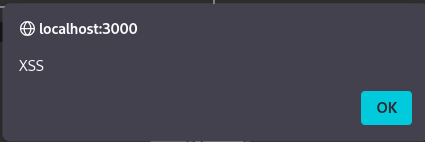
Browser executed the payload immediately on search, producing a JavaScript alert box originating from localhost:3000: images/04-xss-search.png Note: Juice Shop is an Angular single-page application. This search action is handled entirely client-side and does not generate a new server request — no corresponding entry appears in a network proxy (Burp Suite) for this specific payload, since the vulnerability exists in client-side DOM rendering, not server-side request handling. Findings The search feature reflects user-supplied input directly into the DOM without sanitization This results in a DOM-based XSS: arbitrary JavaScript executes in the context of the victim’s browser session No server interaction is required to trigger the vulnerability Detection Angle
This is meaningfully different from the network-layer findings in this portfolio (vsftpd, SSH, UnrealIRCd). Server-side logging or a WAF would not detect this, since the malicious payload never traverses the network in a form the server processes — it’s rendered and executed purely client-side. Effective detection/mitigation here requires:
A strict Content Security Policy (CSP) blocking inline script execution Browser-level XSS auditing Framework-level auto-escaping (Angular includes XSS protections by default; this suggests they were bypassed, disabled, or insufficient for this input path)
Remediation Sanitize and encode all user-supplied input before DOM insertion Implement and enforce a strict CSP header Review Angular template bindings for unsafe innerHTML or bypassed sanitization (e.g. bypassSecurityTrustHtml)